
Behind the Show · Studio Z · Dhaka
To a Dhaka Stage
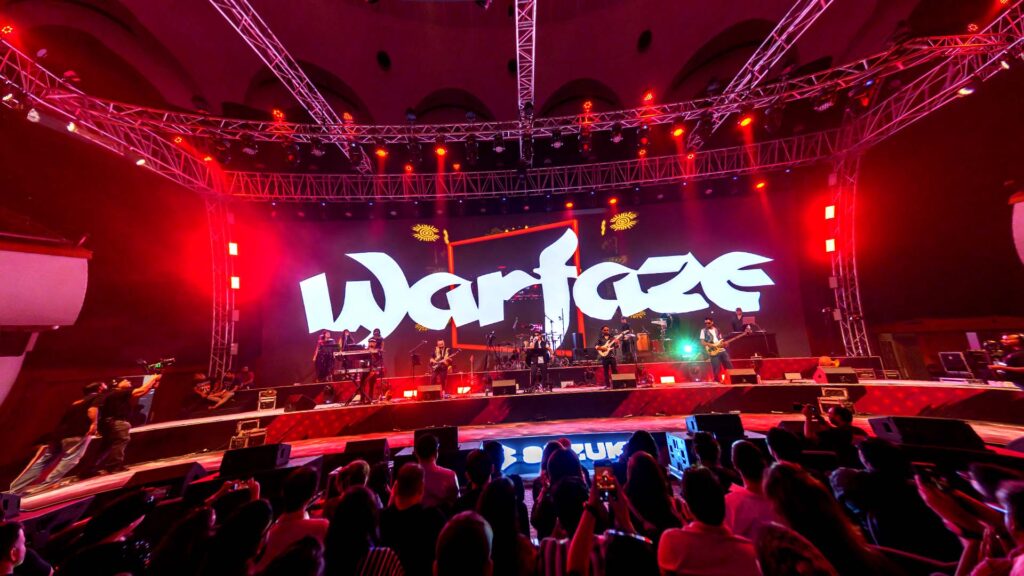
Warfaze — the band that brought heavy metal to Bangladesh — spent two hours playing Michael Jackson, then one hour playing themselves. I ran the technical show.
On 31 July 2026, at the Hall of Fame, Bangladesh-China Friendship Conference Center in Dhaka, Warfaze performed a Michael Jackson tribute for two hours, then played their own set for one more. The show was Suzuki Presents Playlist: Tribute to Originals.
I was the Technical Director.
I did not play a note, dance a step, or sing a word. I ran the technical side of the show — coordinating every technical department so that lighting, LED, sound, camera, choreography and content all landed on the same cue — and delivered, through my own studio, the visual content and a holographic moment Bangladesh had never seen on a concert stage.
This is the story of the part of a concert nobody photographs.

Chapter 01 — The Call
I Didn’t Pitch For This. I Was Named.
Most production jobs arrive as a brief. This one arrived as a recommendation.
While the show was being planned, Sheikh Monirul Alam Tipu — Warfaze’s founder and leader — proposed me to the agency directly. And the agency already knew the work: Brandmyth Limited had worked with Studio Z and with me on earlier projects, ones that landed well enough to be worth repeating.
So there was no pitch deck and no competitive round. The band’s leader put my name forward, and the agency had already seen what happens when we’re in the room.
That changes how you work. When you’re chosen rather than selected, nobody spends the first month testing whether you belong there. You start at the actual problem.
Chapter 02 — The Band
42 Years of Heavy Metal, and a Medal From the State
If you’re outside Bangladesh, you need this context, because it changes the weight of everything that follows.
Warfaze formed in June 1984 in Dhaka. They are one of the first heavy metal bands this country ever had — founded by Ibrahim Ahmed Kamal alongside Meer, Helal, Naimul and Bapi, at a time when metal had essentially no audience here. Sheikh Monirul Alam Tipu joined on drums in 1986 and has held the band together through four decades and roughly twenty line-up changes. Everyone calls him the founder. He earned it.
They started as a covers band — Iron Maiden, Deep Purple, Whitesnake, Scorpions, Guns N’ Roses, Dokken. Then in 1991 they released their self-titled debut, with “Boshe Achi Eka” and “Ekti Chele,” and Bangladeshi rock had a spine.
Eight studio albums followed. Obak Bhalobasha in 1994, whose eight-minute-thirty-seven-second title track is one of the earliest progressive rock songs in Bangladeshi history. Jibondhara in 1996. Oshamajik in 1998. Alo in 2000. Moharaj in 2003. Poth Chola in 2009. Shotto in 2012, with “Purnota” and “Rupkotha.” Along the way, Somorpon in 2011 — a fusion record that pushed heavy metal into Bangladeshi folk as a tribute to Lalon, Hason Raja and Baul Shah Abdul Karim.
Almost every working metal musician in Bangladesh today names Warfaze as the reason they started.
Then, in February 2026, Warfaze became the first band in Bangladesh’s history to receive the Ekushey Padak — the nation’s second-highest civilian honour. They found out four minutes before walking on stage at Mirpur Stadium for the Odommo Bangladesh T20 Cup opening ceremony.
This is not just a milestone for us, but for the entire Bangladeshi band music community.Warfaze, on receiving the Ekushey Padak
The Michael Jackson tribute was their first solo concert since receiving it. In their 42nd year. In a national venue seating close to 4,000, deliberately capped by the organisers at 2,500 so the room would stay comfortable and safe.
That is the show I was asked to technical direct. A 42-year-old heavy metal institution, freshly decorated by the state, playing the most meticulously produced pop catalogue in human history — in their own rock idiom.
Their keyboardist Shams Mansoor Ghani described the musical problem better than I could:
Michael’s songs are built on layers of synth with almost no guitar, so reshaping them into our rock sound has been the hardest work we have done. We want the audience to feel it is unmistakably Michael and unmistakably Warfaze.Shams Mansoor Ghani · Keyboards, Warfaze
That sentence became my brief too. Everything I built had to be unmistakably Michael and unmistakably Warfaze — in light, in image, in motion.
Chapter 03 — The Idea
Las Vegas 2014. Dhaka 2026.
Here is the idea that made me give this project everything I had.
On 18 May 2014, at the Billboard Music Awards at the MGM Grand Garden Arena in Las Vegas, Michael Jackson appeared on stage five years after his death and performed Slave to the Rhythm — a song begun during the Dangerous sessions in the early nineties and released in 2014 on Xscape. Gold jacket, red trousers, staging built as a nod to the Dangerous artwork. Sixteen live dancers. A live band. Directed by Jamie King, choreographed by Rich and Tone Talauega, backed by the Estate of Michael Jackson.
It took nearly six months to build. It was reported afterwards that it was not a literal hologram at all, but a projected stage illusion built on a live performer with digital face work on top — the descendant of a Victorian theatre trick, executed with the full weight of a Hollywood production budget. There was even a legal fight that nearly stopped it reaching the stage.
None of that mattered to the audience. What mattered was that for a few minutes, Michael Jackson was in the room.
That was 2014. In the United States. With the Estate, a six-month build, and a production team of that scale.
Twelve years later, in 2026, I sat in Dhaka with a setlist, a small team, and a question: can we bring that idea here?
Not the budget. Not the Estate. Not sixteen dancers and Jamie King. Bangladesh has never had that, and pretending otherwise would be dishonest.
But the idea. The moment where an audience stops being sure what it is looking at. That is not a money problem. That is a craft problem — geometry, light discipline, timing, and a team willing to rehearse a single window until it is exact.
Nobody had done it on a concert stage in this country. That is precisely why I wanted it.
Chapter 04 — The Role
What a Technical Director Actually Does
This question comes up constantly and most answers are vague, so here is a specific one.
A Technical Director makes sure a set of independent technical departments — who have never worked together, who each have their own crew, their own load-in window, and their own private definition of the word “ready” — produce one coherent output on one night, in one room, with no second take.
Not creative direction. Not stage management. Not budgets. Translation and enforcement.
The commercial and operational side of this event belonged to the event manager, Brandmyth Limited and Mars & Co. — contracts, payments, venue check-in and check-out, ticketing, passes, sponsor obligations, departmental scheduling. That was never my desk and I never touched it. I coordinated the vendors on the technical side only.
Six technical languages. One output. The technical director’s job is making “ready” mean the same thing in all six.
Chapter 05 — The Setlist
Three Songs Arrived Five Days Before the Show
Fronting those two hours as Michael Jackson was Michael Imran, who has performed as MJ on Ityadi — Bangladesh Television’s longest-running magazine programme — multiple times, and played Michael Jackson in the classic Jump Keds commercial. He is, for a generation of Bangladeshis, the face that arrives when you say the words.
You cannot design visuals, lighting, choreography or costume for a song that might get cut.
We began with a bank of 19 Michael Jackson songs, nine Warfaze songs, and one slot marked TBC. That was never a setlist. It was a menu, and every item on it cost real production hours to prepare.
26 July was the day it became real. Two meetings, same day.
The band confirmed the final MJ set at 16 songs: Thriller, Billie Jean, Beat It, Heal the World, Earth Song, They Don’t Care About Us, Man in the Mirror, Smooth Criminal, Dirty Diana, You Are Not Alone, Give In to Me, Human Nature, The Way You Make Me Feel, Bad, Black or White, We Are the World.
Six were dropped. And three were added that had never been in the bank at all — Human Nature, The Way You Make Me Feel, and We Are the World.
Read that again. Three songs entered the setlist five days before the show with no prepared content, no colour palette, no choreography reference and no costume note.
Then, between 5 and 6 PM the same evening, a separate meeting with Tipu locked the Warfaze set at ten songs — adding Dhupchaya from Jibondhara and Nei Proyojon from Oshamajik.
Sixteen plus ten. Twenty-six songs. Two completely different musical identities in one night — a Michael Jackson pop spectacle and a Bangladeshi heavy metal set — sharing one LED wall, one lighting rig, one media server and one operator.
Chapter 06 — The Method
The Show Worked Because Everyone Read the Same Sentence
This is the actual work, and it is the part nobody puts in a showreel.
Between late June and the night before the show, I built a chain of documents where each one fed the next.
Tech riders, written per department
Not a generic template — a specific statement of what each department had to hand over to another department, and when. Distributed 11 July.
Costume reference, in three editions
Desktop, mobile and printable. Because the people who need a costume reference are backstage holding a phone, not sitting at a desk.
The VJ and Lighting Colour Guide
Built across three revisions. This is the document I would point to if someone asked what technical direction looks like on paper. A locked colour palette, per song, that the lighting console and the video rig both worked from. When Smooth Criminal hits, lighting and LED are not making independent guesses about what colour that song is. They agreed a month earlier, in writing.
The Choreography Guide
Built for the dance team — song by song, with the base palette attached, and every unconfirmed choreography slot explicitly flagged as unconfirmed rather than quietly left blank.
The Show Guide Book
On 30 July, the night before the show: one consolidated master reference pulling setlist, visual cues, colour guides, choreography and technical notes into a single document — so that on show day nobody had to open six files to answer one question.
The show didn’t work because the gear was good. It worked because every technical department was reading the same sentence.
Chapter 07 — Previsualisation
Building the Room Before the Room Exists
Before load-in, the entire stage existed in 3D.
I previsualised the Hall of Fame stage — LED wall, truss and fixture positions, the runway, the audience geometry, the light throw. Not for a pretty render. For settling arguments.
Previz is how you discover that a follow spot position is blocked, or a projector throw clips a truss, or a dancer’s entry lane crosses a cable run — in a file, in June, instead of on the floor in July with every crew in the building watching.
When a lighting engineer, an LED engineer and a choreographer are all looking at the same 3D frame, the conversation stops being opinion.

Chapter 08 — The Team
Three People
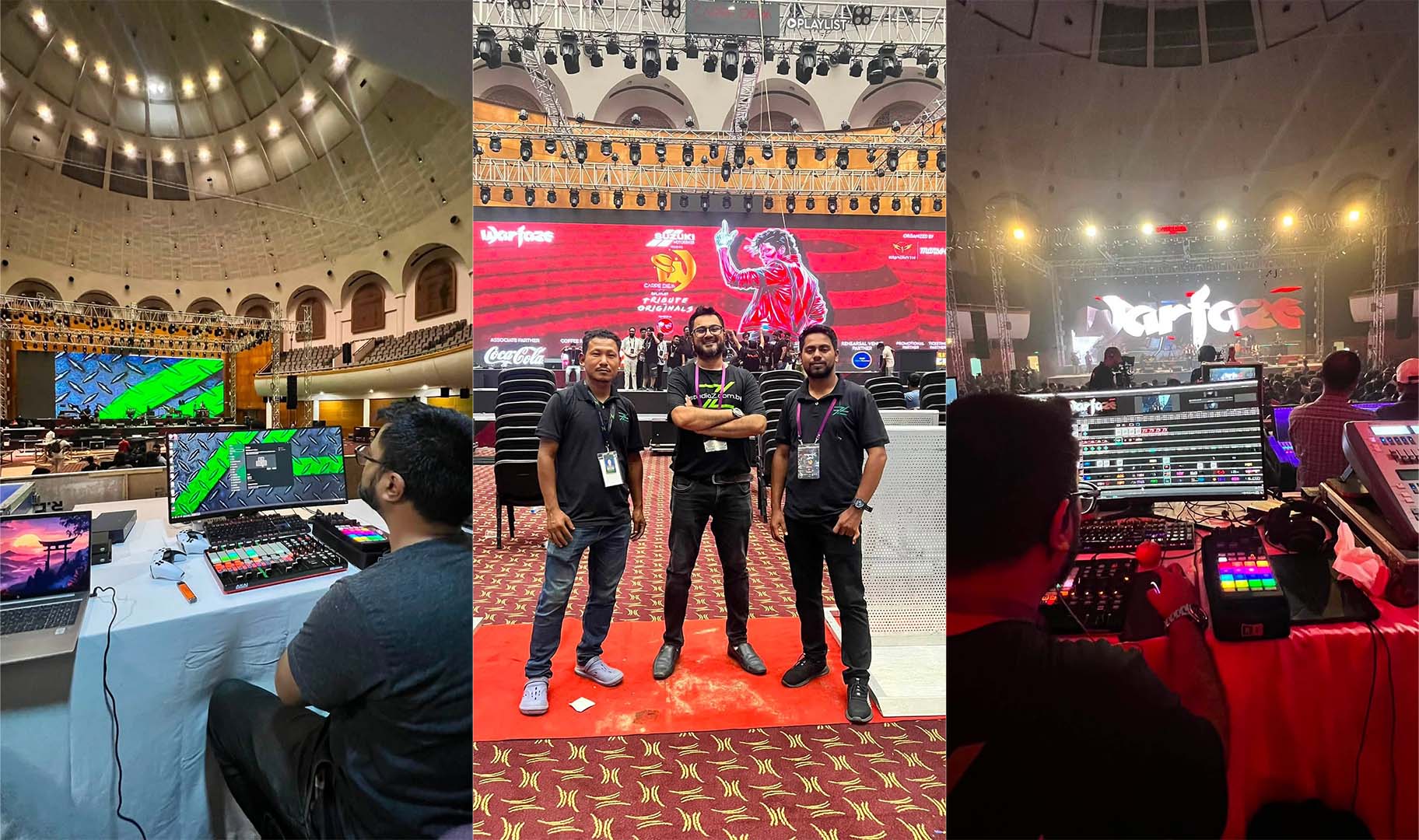
Studio Z is small, and on this project it was three of us.
Ariful Islam Bappi and Bikhil Rema carried this show with me. Content production, build, technical operation, and the long unglamorous hours between a plan and a working system. Twenty-six songs of custom visual content, a full live VJ build and a holographic segment do not get made by one person with a good idea and a laptop.
If you have ever wondered how a three-person studio delivers at national-event scale — this is how. You document everything, you rehearse the fragile parts more than the safe ones, and you work with people who don’t need to be told the same thing twice.
Bappi and Bikhil — thank you. This one was heavy.
Chapter 09 — The Moment
The 180 Seconds
Three minutes of that show were a holographic illusion.
A holographic illusion is not a visual effect. It is an agreement between departments.
The illusion only exists inside a very specific light condition — which means for those 180 seconds, every other department has to give something up. The lighting console has to reach an exact state and hold it. The follow spot operators have to not do the one thing follow spot operators instinctively do. The camera team has to know where they can and cannot be. The choreography has to place bodies inside a boundary the audience cannot see but the physics can. The audio cue has to land on the frame, not near it.
That is why it existed in the riders, the briefing agenda, the colour guide and the choreography guide as a special moment with its own requirements — a month before it existed on a stage.
Twelve years after Las Vegas. First time on a concert stage in Bangladesh.
Chapter 10 — The Response
What the Press Saw
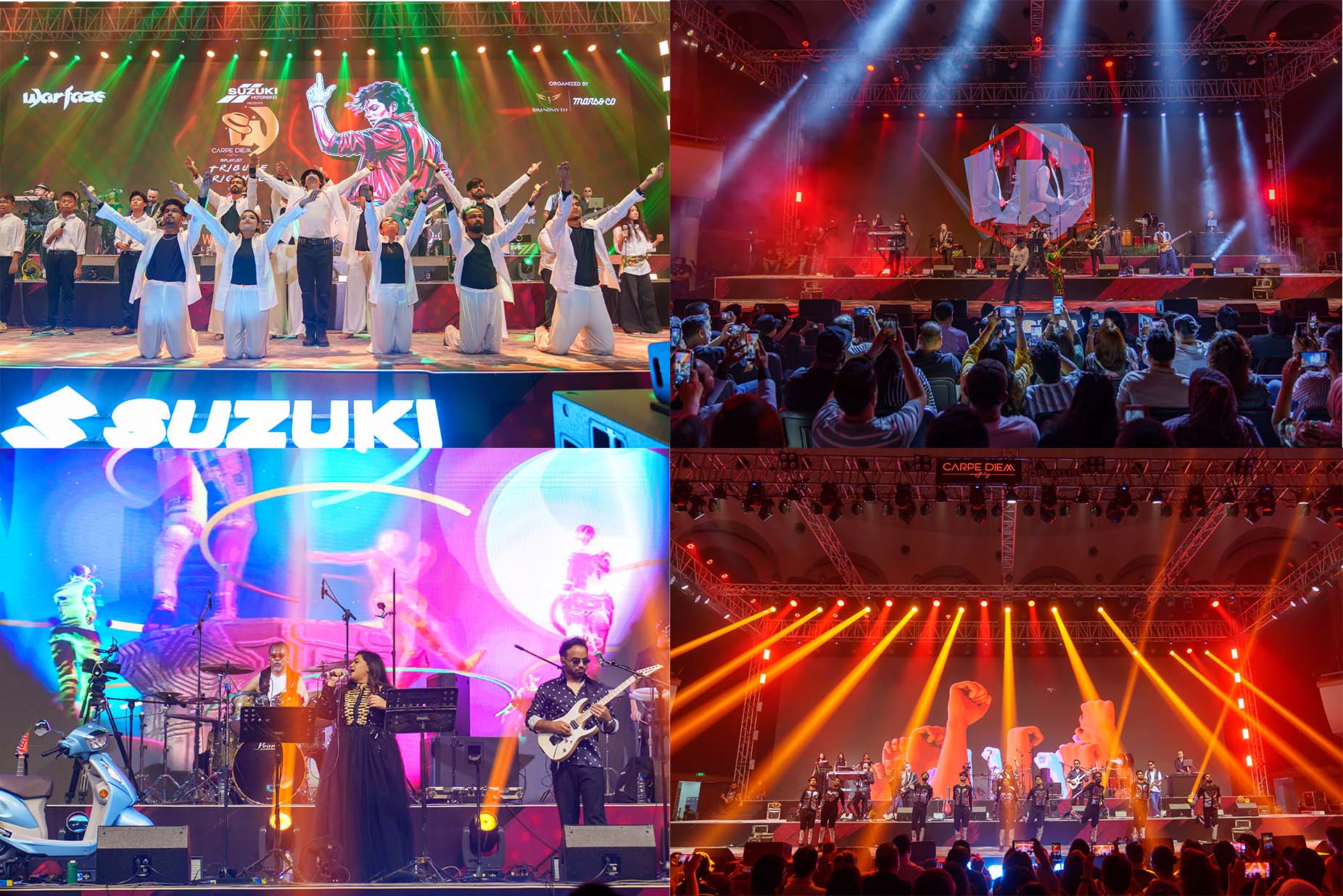
I’m not going to tell you how the room reacted. Three national outlets were there, and their own framing says it better than mine would.
Channel 24 Entertainment
Their headline translates as “It was as if Michael Jackson returned to the Warfaze stage.”
Kaler Kantho Entertainment
Kaler Kantho covered it as a tribute — Warfaze remembering Michael Jackson through his songs.
Vision24
Vision24 went straight to the performance — Beat It, one of the songs Warfaze had been covering long before this show was ever imagined.
Three outlets. Three different framings of the same night. That’s usually a good sign.
Takeaways
What This Show Taught Me
Documentation is the deliverable
Technical departments don’t align because you’re persuasive in a meeting. They align because there is a document, it is specific, it is dated, and everyone has it. The Show Guide Book was the most important thing I made on this project, and it contains no creative work at all.
A colour palette is a contract
The highest-leverage document on this show turned “make it feel like Smooth Criminal” into a value that two different consoles could execute without talking to each other.
Scale is not the same as ambition
Las Vegas had six months and the Michael Jackson Estate. We had a small team in Dhaka and a locked lighting cue. The idea travelled anyway. Most of what people assume is a budget problem is actually a rehearsal problem.
Work With Me
If Your Show Needs This
This is the brief I’m built for
- You’re running a multi-department production and need one person accountable for the technical output, not six people each accountable for their own corner of it.
- You have a concert, national event, corporate launch or brand activation where lighting, LED, sound, camera, choreography and content all have to hit the same cue.
- You need production documentation that actually works — riders, cue sheets, colour guides, run-of-show, previz — not a deck.
- You want a live holographic moment, and you want people who have already delivered one in front of a live audience at national scale.
- You have a band or an artist and nobody is translating between the creative side and the technical side. That role has a name. It’s this one.
FAQ
Frequently Asked Questions
What does a technical director do at a concert?
A technical director is the single point of technical accountability for a show. On Warfaze’s Michael Jackson tribute I coordinated every technical department — lighting, LED, sound, video and camera, choreography and content — so all of them delivered against the same cues on one night. Operations and finance were handled separately by the event manager.
Who was the technical director of Warfaze’s Michael Jackson tribute concert?
Zunayed Sabbir Ahmed of Studio Z, Dhaka. He directed the technical side of the production and also produced Studio Z’s own content and holographic scope, working with Ariful Islam Bappi and Bikhil Rema.
When and where was Warfaze’s Michael Jackson tribute concert?
31 July 2026, at the Hall of Fame, Bangladesh-China Friendship Conference Center (BICC), Dhaka. Two hours of Michael Jackson followed by a one-hour Warfaze set. Organised by Warfaze with Brandmyth Limited and Mars & Co. as event manager.
Who are Warfaze?
Warfaze are a Bangladeshi heavy metal band formed in Dhaka in June 1984, widely credited with introducing heavy metal and hard rock to Bangladesh. They have released eight studio albums since their 1991 self-titled debut. In February 2026 they became the first band in Bangladesh to receive the Ekushey Padak, the country’s second-highest civilian honour.
How many songs were performed?
Twenty-six — a 16-song Michael Jackson set and a 10-song Warfaze set.
What was the holographic segment?
A 180-second live holographic illusion performed in the room in real time, running on a holographic screen.
When was Michael Jackson’s first hologram performance?
18 May 2014, at the Billboard Music Awards at the MGM Grand Garden Arena in Las Vegas, performing Slave to the Rhythm with sixteen live dancers and a live band. It took nearly six months to produce, was directed by Jamie King, and was backed by the Estate of Michael Jackson.
Who performed as Michael Jackson at the Warfaze tribute?
Michael Imran, who has performed as Michael Jackson on Bangladesh Television’s long-running programme Ityadi and played MJ in the classic Jump Keds commercial.
What is a VJ and lighting colour guide?
A per-song locked colour palette shared by the video and lighting departments, so both produce a coherent look for each song without live negotiation. On this show it was built across three revisions and used simultaneously by the lighting console operator and the Studio Z video rig.
Can Studio Z deliver a holographic show for my event?
Yes. Studio Z delivers live holographic moments as part of full technical direction or as a standalone production element, in Bangladesh and internationally.
Let’s Build Your Show
If you’re an artist, agency or brand looking for a technical director who treats every show like a once-in-a-lifetime moment — let’s talk.
Book a Consultation Work With Studio ZWritten by Zunayed Sabbir Ahmed — Technical Director & Producer, Studio Z · Dhaka, Bangladesh · Live Holographic Illusion · Concert Technical Direction · Projection Mapping · Resolume · MadMapper
Related reading: directing Nepal’s Kandara at Club Nova · mapping the Museum of Qatar from Dhaka · rebuilding a mountain pub’s LEDs in Chiang Rai
