
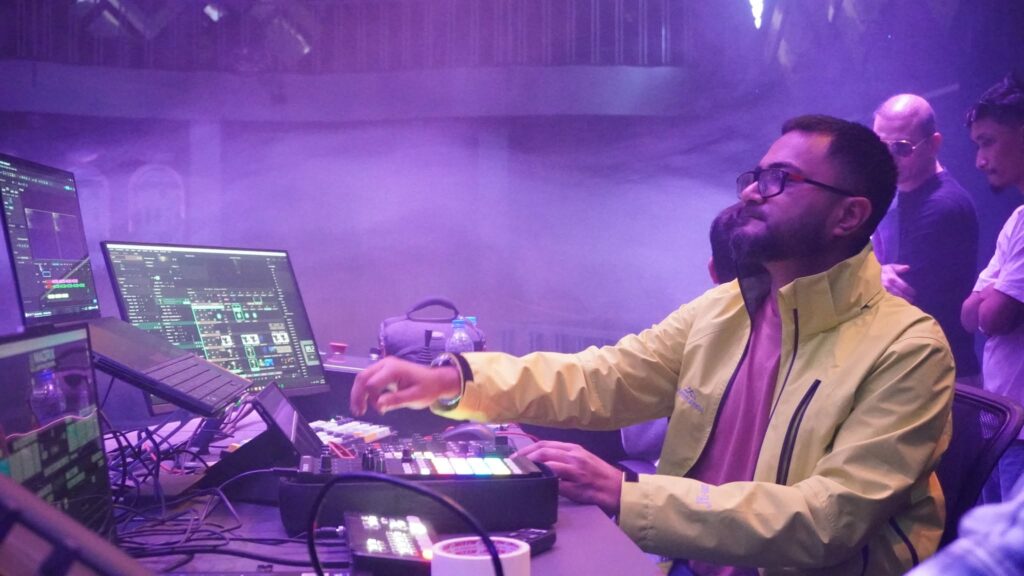
Behind the Role · Zunayed Sabbir Ahmed
Visual Jockey or Technical Director — Which One Still Thrills Me More?
Somebody asked me this at a workshop last year and I gave a diplomatic answer. I have thought about it since, and the diplomatic answer was not the true one.
I have spent fourteen years behind a VJ desk. I started performing live visuals in Bangladesh in 2011, when almost nobody here knew what a VJ was, and brought projection mapping and LED pixel mapping into the country in 2013. Four hundred-plus shows at home. Twenty-plus productions abroad, across Nepal, Thailand and Qatar. That is the work that made me.
In the last few years a different title has been landing on my call sheets. Technical Director.
The two jobs feel nothing alike.
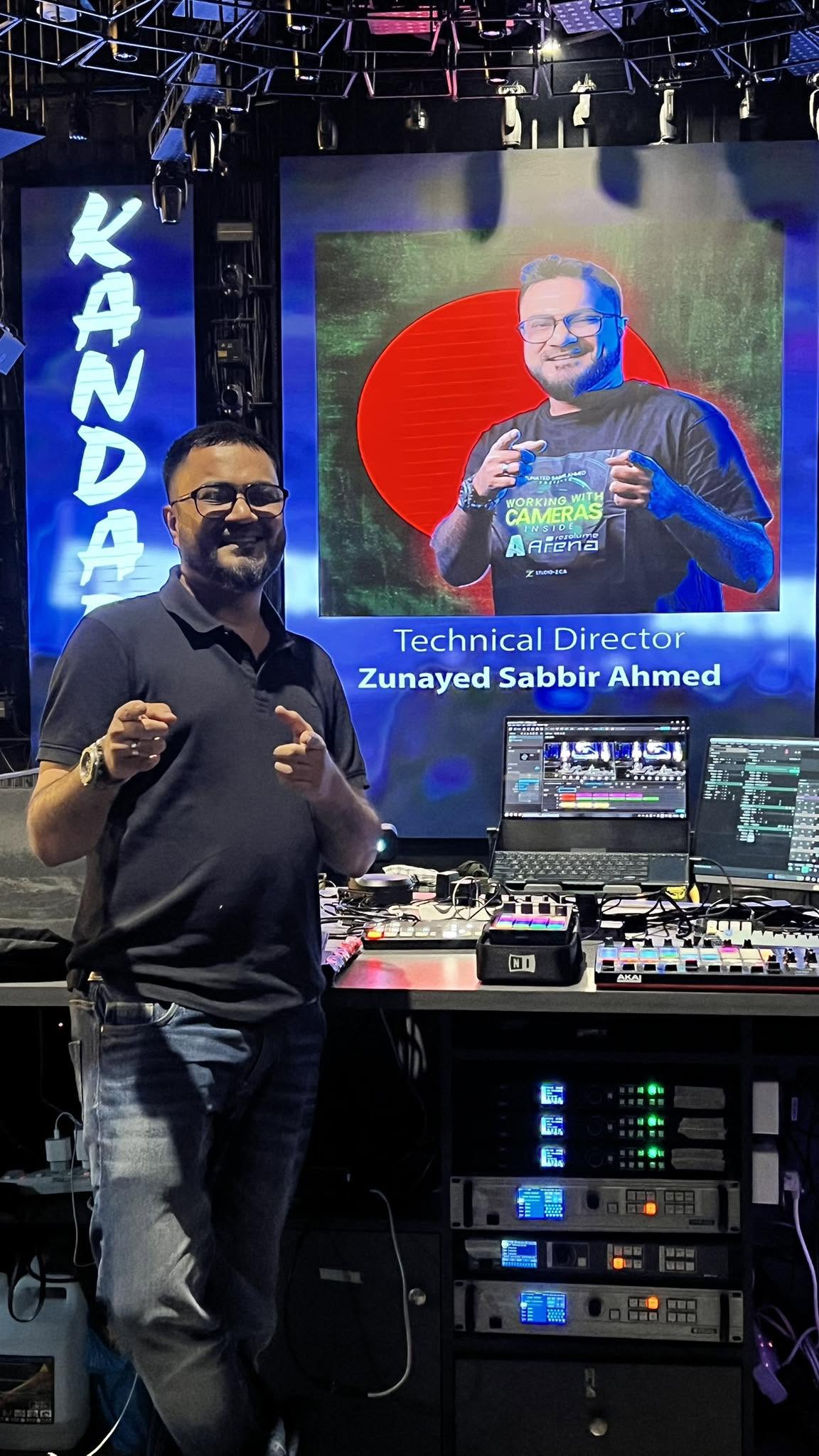
Chapter 01
What is the actual difference between a VJ and a Technical Director?
A VJ performs live visuals. A Technical Director plans and manages the technical side of the entire production and holds authority over every technical department. The VJ is responsible for one discipline executed brilliantly. The TD is responsible for all disciplines agreeing with each other.
When I VJ, my world is roughly two metres wide. Controller, clips, the music in my ears, the wall in front of me. I am reacting in real time to a room, and the feedback is immediate — I can feel a crowd lift on a cut.
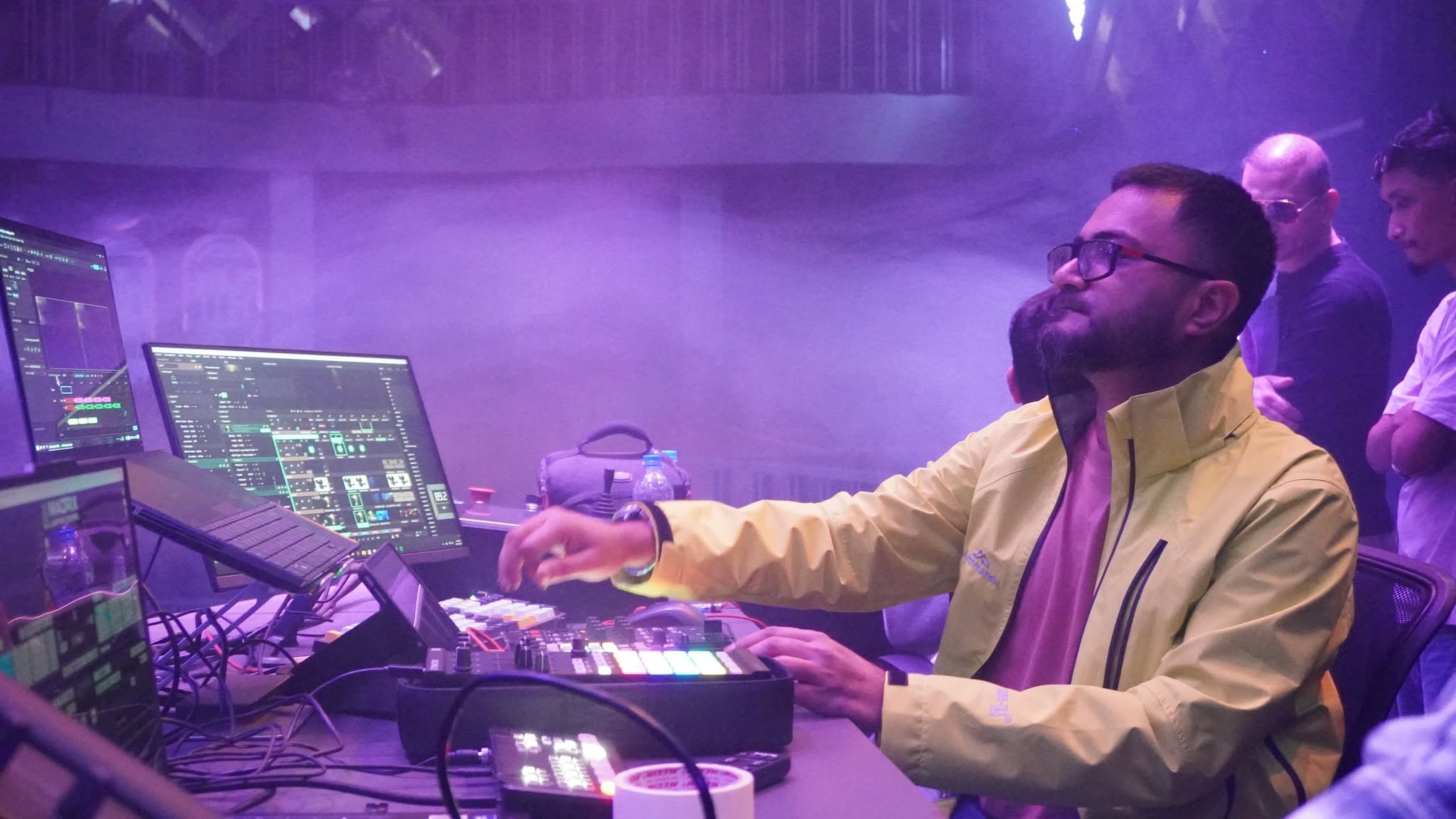
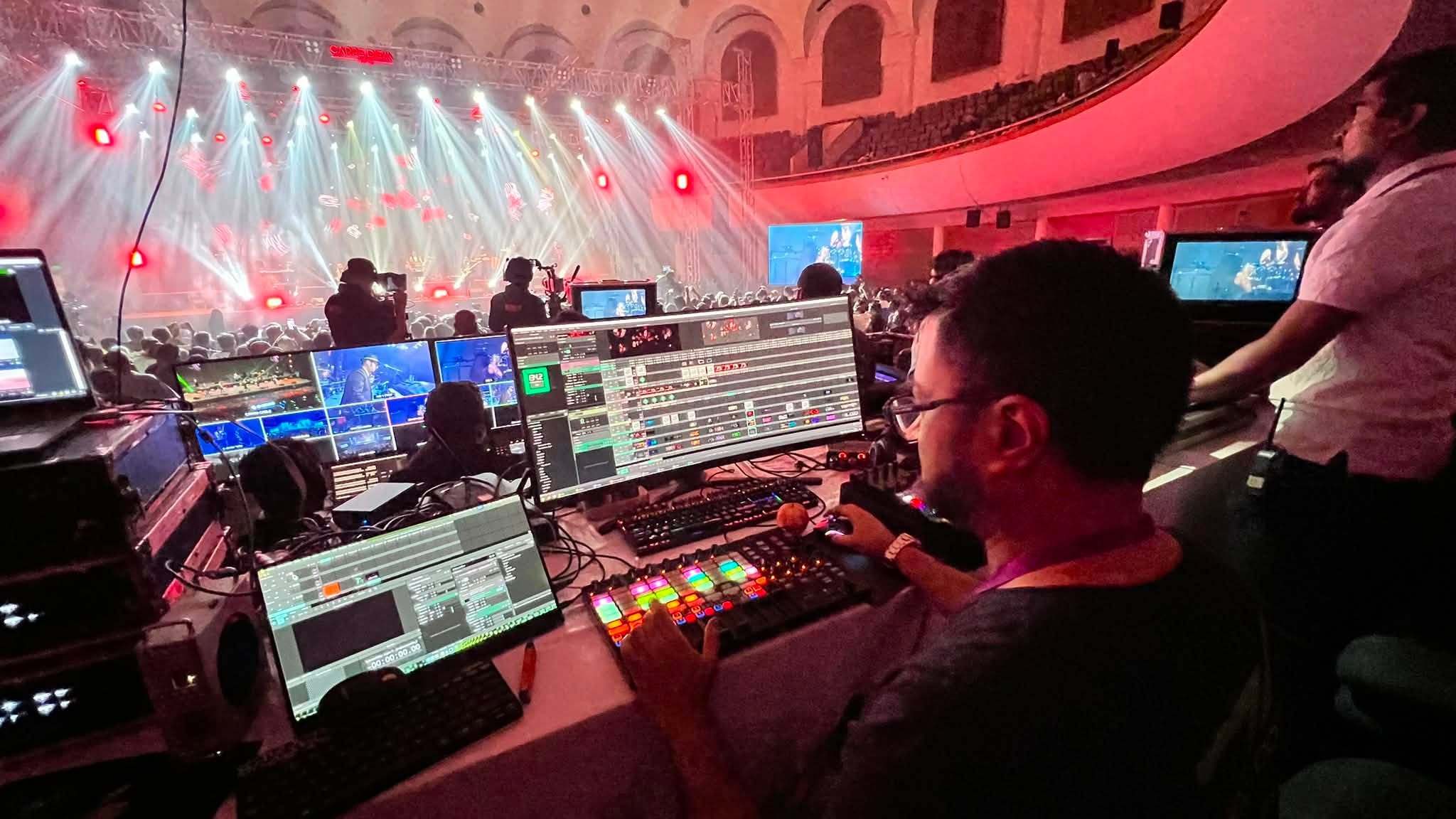
When I am the Technical Director, I might not touch a single piece of equipment on show night. Lighting has an engineer. Sound has an engineer. Camera has a team. LED has a vendor. Choreography has its own people. My job is that all of them are executing the same show.
The honest version: as TD I am accountable for outcomes I do not personally produce. That is a completely different nervous system.
Chapter 02
What does a Technical Director actually do?
The TD is the single technical authority across a production. Practically, that means directing lighting, LED, sound, camera, crew and visual production; setting the palette and direction that the lighting designer executes; dealing with vendors directly; and shaping the technical plan so the project uses its capacity and its budget well.
There is a boundary I keep clean, and I think producers appreciate it. I do not own the money, the contracts, the ticketing or the venue operations. That belongs to the event and production managers, and they are better at it than I would be. My authority is technical. Everything technical, and nothing beyond it.
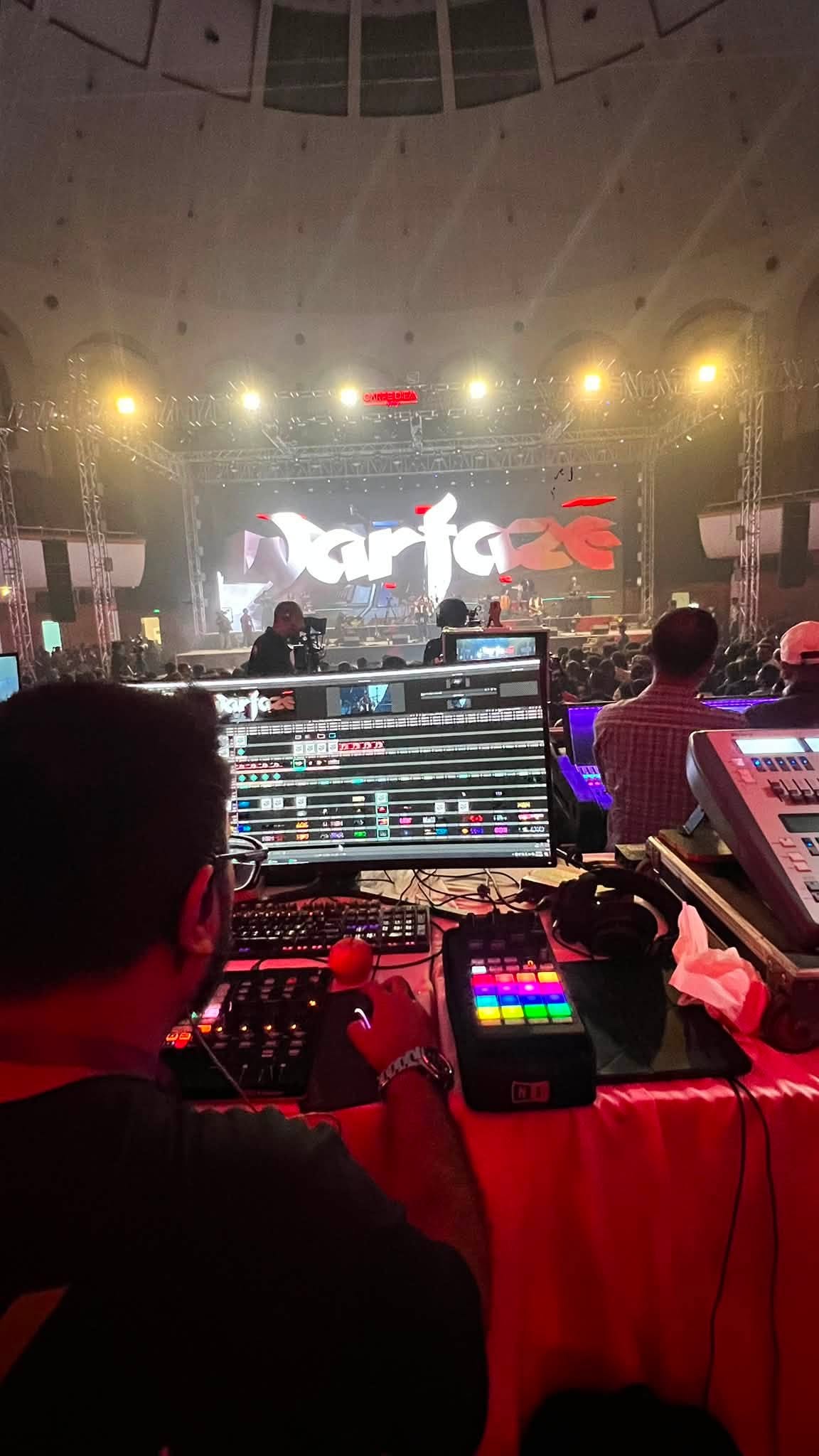
I also want to be precise about something else. On the Warfaze × Michael Jackson tribute at BICC in July, I was Technical Director for the whole show, and Studio Z was one of the vendors delivering under that direction. Those are two separate jobs I happened to hold at once. When I direct, I direct — including the company I founded.
Chapter 03
How did fourteen years in a booth prepare me for this?
By teaching me what everybody else’s job actually costs.
I have spent a lot of nights being the person who could not deliver because a decision upstream made it impossible. Content approved too late. A palette nobody agreed on. A stage geometry that killed a projection idea on load-in day. I know exactly how those failures feel from the bottom of the chain, and that is the only reason I am useful at the top of it.
Teaching sharpened it further. I became the first certified trainer in South Asia across Resolume, MadMapper and HeavyM, and a HeavyM Ambassador in 2024. I have put 499 videos on YouTube — 1.83 million views, roughly 48,000 hours watched, 16,000 people who decided to subscribe. In 2025 I published the first Bengali-language book on projection mapping at Ekushey Book Fair. Teaching forces you to explain a system to someone who does not share your assumptions. That is most of what a TD does all day.
Chapter 04
What does the job look like in practice?
Take a recent one. Twenty-six songs — sixteen Michael Jackson, ten Warfaze — in a room capped at 2,500. Five songs entered the setlist five days before the show with no visual language, no palette, no choreography note, no costume reference.
None of that got solved in the venue. Technical riders went to each department on 11 July. The colour guide went through three revisions. Everyone sat in one room on 28 July. The consolidated show guide closed on 30 July. The show was on 31 July.
That sequence is the job.
Documentation is the deliverable. Nobody applauds a rider.
A large show is a translation problem — one person says a song title, and five departments hear five different things. A document is what turns those five interpretations into one.
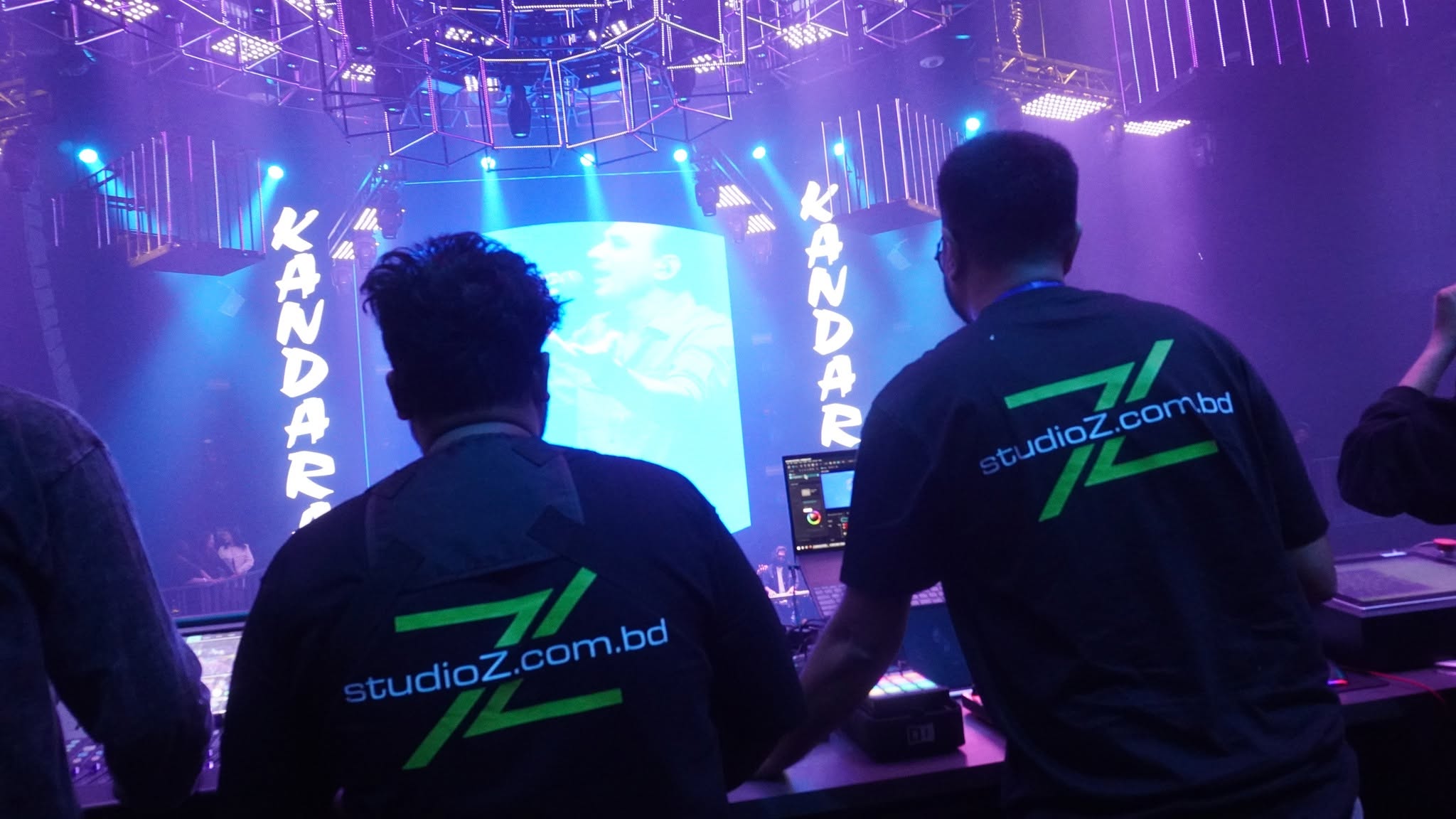
Touring work has taught me the same lesson in a different shape. On Kandara’s international touring, the technical rider is built so that one document scales from a small club to a stadium, with every requirement tagged by show type. In Kathmandu in April, that document was the reason a Bangladeshi technical team could run a full production for a Nepali band in front of 2,500 people without a single argument about what was supposed to arrive.
Chapter 05
So which one still thrills me more?
VJing. Without hesitation.
Nothing in technical direction feels like a room going up on a cut you made a quarter-second earlier. That is a drug and I am not pretending otherwise. I still take VJ work. I will always take VJ work.
But thrill is not the same as weight. When a show holds together — when five vendors execute one idea and the audience never once notices the coordination underneath — that is a slower, heavier satisfaction. It does not spike. It settles.
The booth gives me joy. The desk gives me meaning. I am not choosing.
Chapter 06
Thank you
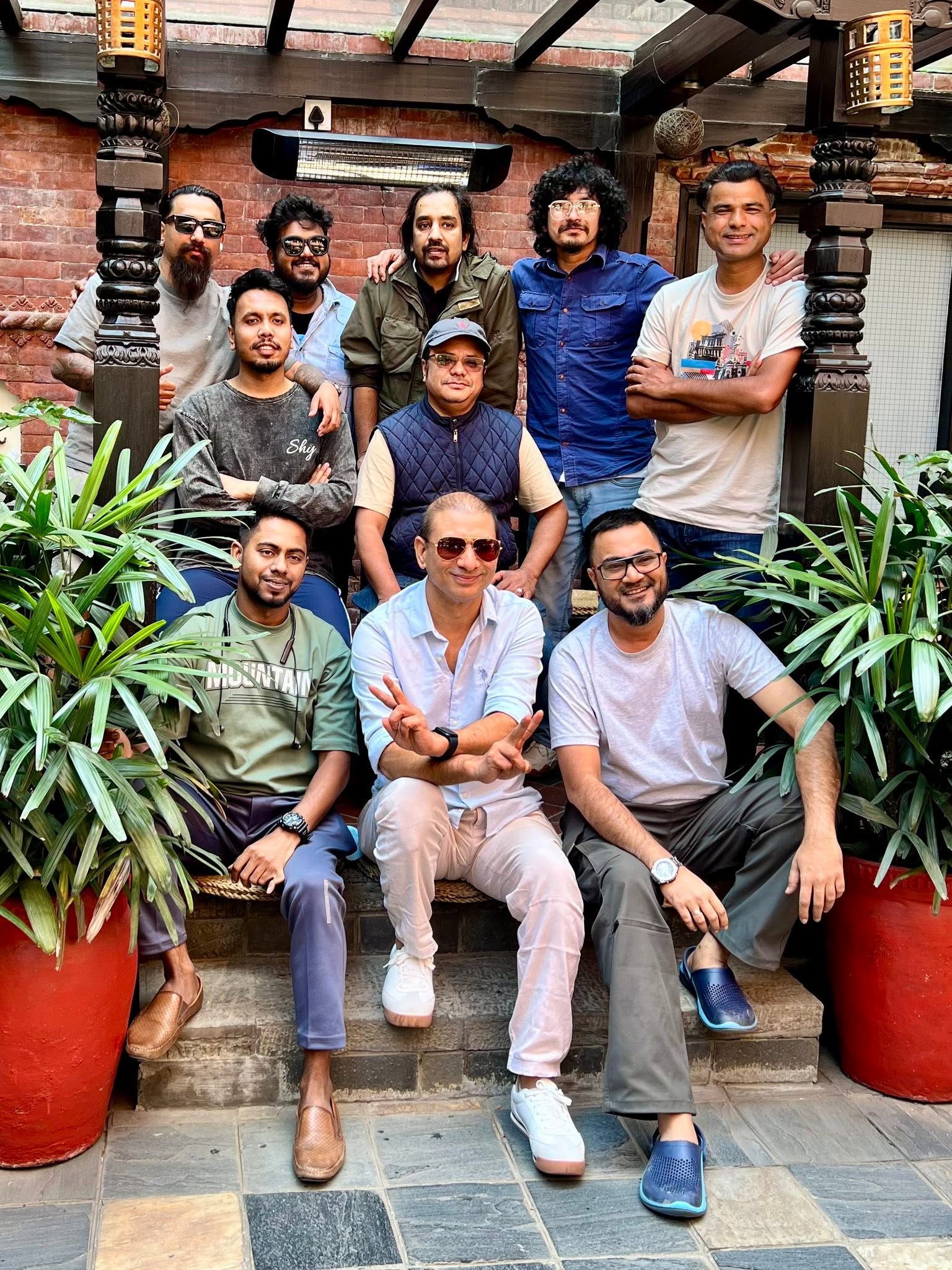
I owe this to the agencies, event managers and artists who took a risk on the guy from the VJ booth. Warfaze and their organisers. Brandmyth and Mars & Co. Kandara. The vendor teams — AV Pro, 360 Degree Ads, SP Rhythm, SNS Prodction, Stormy Sky, Raw Exposure — who took direction from me with grace on a hard show. My own team at Studio Z, Bappi and Bikhil in particular.
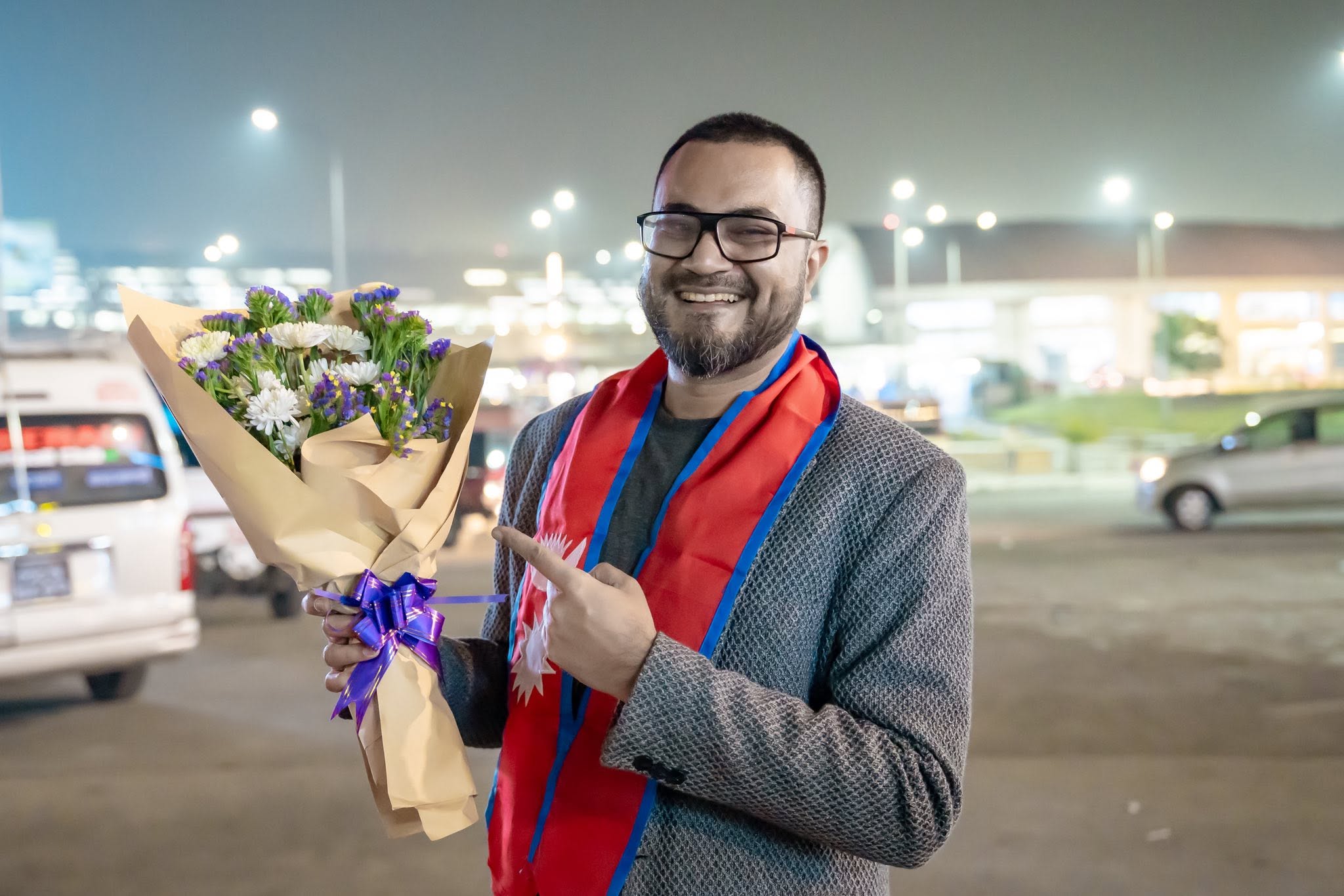
Nobody hands you a whole production because you asked for it. Somebody decided to trust you. I have not forgotten who.
FAQ
Questions people ask me
What does a technical director do on a live concert?
A live-show Technical Director plans and manages the technical side of the whole production, directs every technical department and vendor, resolves conflicts between systems, and gives the production one technical authority to execute against.
Is a Technical Director the same as a VJ?
No. A VJ performs live visuals as one discipline. A Technical Director holds authority across all technical disciplines and is responsible for the production’s technical coherence.
Does the Technical Director control the budget?
Not in my scope. Budget, contracts, ticketing and venue operations remain with event and production management. I guide financial decisions through technical choices, but I do not own the money.
When should a producer bring in a Technical Director?
As early as possible. Almost everything a TD can fix cheaply becomes expensive once equipment is ordered and the venue is loaded in.
Do you still take VJ work?
Yes. Regularly, and gladly.
If your next show needs this
If you are planning a concert, a launch or an immersive production and you need one person holding the whole technical picture, that is the work I do. Recent engagements include the Warfaze × Michael Jackson tribute in Dhaka and Kandara’s international touring, alongside work across Bangladesh, Nepal, Thailand and Qatar.
I am reachable at sz2experience@gmail.com or +880 1730 651 732. If you would rather look first, most of what I know is already on my YouTube channel for free.
