
When a Venue Owner Says “This Can Be Better”
It didn’t start with a proposal.
It didn’t start with a meeting.
It started with a WhatsApp message from an unknown number.
The sender was the owner of a small pub on top of a mountain in Chiang Rai, Thailand. And his message was just one sentence:
“Bro, I think my club visuals can be better.”
No screenshots.
No technical brief.
Just a feeling.
And in my experience, that’s usually where the real work begins.
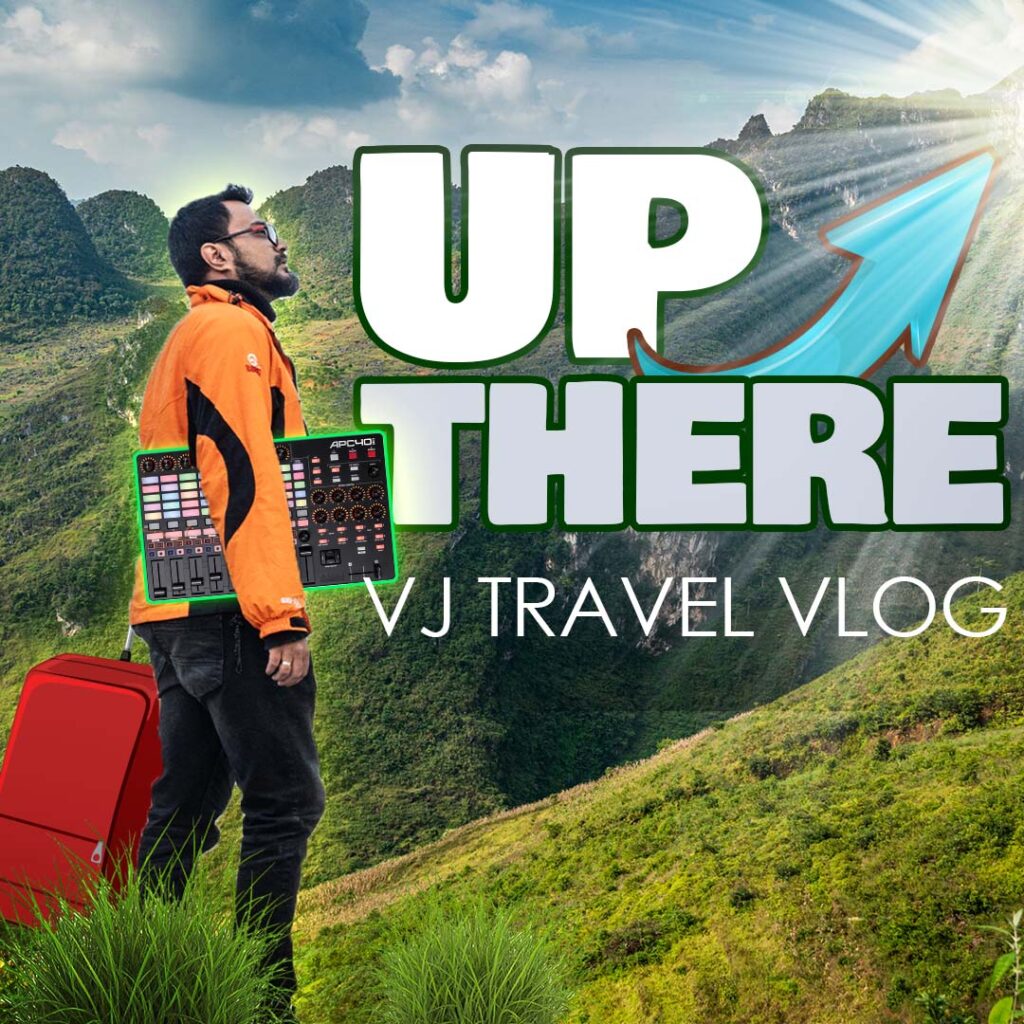
(Embed full vlog here — above the fold)
Why I Took This Job
Small venues often feel trapped between two ideas:
- “We want big-club energy”
- “But we don’t want big-club complexity”
After a few messages, a quick requirement check, and a clear agreement, the job was confirmed. No drama. No over-promising.
Just one goal:
Make the existing LED setup actually work for the venue, the staff, and the crowd.
Arrival in Chiang Rai: Context Matters
I landed in Chiang Rai in the evening.
Cold air. Mountain cold.
The pub owner, Chat — who later became more like a brother — picked me up in his SUV. After checking into the hotel, we went straight to the venue.
The place is called Nakhuang.
It was early. The club was empty.
That’s the best time to see things clearly.
(Photo: exterior / arrival)
First Inspection: Seeing What Others Miss
I walked the room quietly.
- Checked LED placement
- Checked signal flow
- Noted which screens were active, which weren’t
- Understood the spatial rhythm of the room
Nothing was “wrong.”
But nothing was working together either.
Afterward, we sat behind the pub, and I asked one simple question:
“What exactly do you feel is missing?”
After about 20 minutes of discussion, everything collapsed into one sentence again:
“I think this can be better.”
That sentence became the entire brief.
Breaking Down the Real Problem
This is my favorite part of the job.
Not software.
Not gear.
Translation.
What I noticed:
- The LEDs were installed in a way that could look great
- The in-house VJ and lighting operator were capable
- But the system wasn’t built for daily use
There was another important factor:
- The staff didn’t speak English
- So complexity would become a long-term problem
The solution wasn’t “cooler visuals.”
The solution was a clear, repeatable visual system.
Designing a Usable VJ System (Not a Demo Project)
I knew the setup had to be:
- Clean
- Organized
- Easy to understand under pressure
The core decisions:
- Build a Resolume Arena template suitable for an intermediate-level VJ
- Design playlists that make sense musically and visually
- Create mappings that respect the physical LED layout
- Ensure everything could be restored if something went wrong
I also strongly believe in proper control surfaces.
A VJ performing with a keyboard and mouse is unnecessary suffering.
I had recommended an Akai APC40 MK2, but delivery to the mountains is slow. So I brought my Novation Launchpad Mini MK3 — a barely used review unit.
Partly practical.
Partly a small signature gift.
Funny enough, the APC40 arrived the same day I did.
Sometimes the universe cooperates.
(Photo: controller / Resolume setup)
The Night Before: Watching the Room Breathe
That night, the crowd came in after 10 PM.
I didn’t touch anything.
I just watched:
- How people reacted to visuals
- When energy dipped
- When attention shifted
Chiang Rai is a small city — around 30,000 people.
Very wealthy. Very local. Almost no English.
It reminded me of something important:
English feels essential only in certain parts of the world.
Most places don’t need it at all.
By midnight, I was exhausted.
Two flights.
A long drive.
A full evening in a club.
At the hotel, I recorded voice notes, turned them into a task list, and went to sleep.

Work Day: Rebuilding the Visual System
I started work at noon.
Here’s what actually went into the rebuild:
System Tasks
- MIDI controller setup
- Audio input configuration
- Illustrator grid reference for mapping
- Display alignment and LED calibration
- Layer structure and management
- Slice Transform mapping
- Custom chasers, outlines, and wipers
- Pulse sync for music-reactive moments
- Keyboard and MIDI mapping
- A clean, venue-ready playlist
No rushing.
No over-engineering.
I worked for four focused hours, taking short breaks. Chat stayed beside me the entire time, translating between me and the VJ and lighting operator.
They understood Resolume well — their questions were sharp. That’s always a good sign.
When everything was done:
- The playlist was backed up
- Restore steps were explained
- The system was tested end-to-end
Then I loaded my own visuals.
Just to see.
The Result: “Something Different”
The crowd reacted immediately.
Chat watched for a while, then said:
“The audience feels something different.”
I asked:
“Good different or bad different?”
He laughed.
“Good. Very good.”
That’s usually the best kind of feedback.
(Photo: crowd / visuals live)
A Lesson About Language, Music, and VJ Culture
This job taught me something important.
A VJ’s strength is deeply tied to:
- Language
- Culture
- Musical intuition
I can read Bangla tracks instantly.
I’m comfortable with English music.
But Thai or Mandarin tracks?
I don’t feel the emotion the same way.
That doesn’t make the work bad.
It just means every VJ has a different edge.
Understanding that matters — especially when building systems meant to last.
The White Temple: A Final Perspective
On the way back to the airport, my driver took a longer route so I could see the White Temple.
It’s not ancient.
It’s a modern artwork by a single artist.
The entire structure represents heaven.
But to enter, you cross a bridge filled with sculptures showing the dark side of humanity.
The artist says it won’t be finished until 2070.
A living artwork.
Always growing.
That idea stayed with me.
Good show design is like that too.
Who This Kind of Work Is For
This project wasn’t about making a venue flashy.
It was about making it functional, expressive, and sustainable.
If you run a:
- Club
- Pub
- Live music venue
- Small space that wants to feel intentional
Then visual systems matter more than individual effects.
Watch the Full Chiang Rai VJ Trip
If you enjoyed this journey and want more behind-the-scenes stories from real venues, let me know in the comments.
And if you’re building something — or feel like “this can be better” — you already know how these stories usually start.
